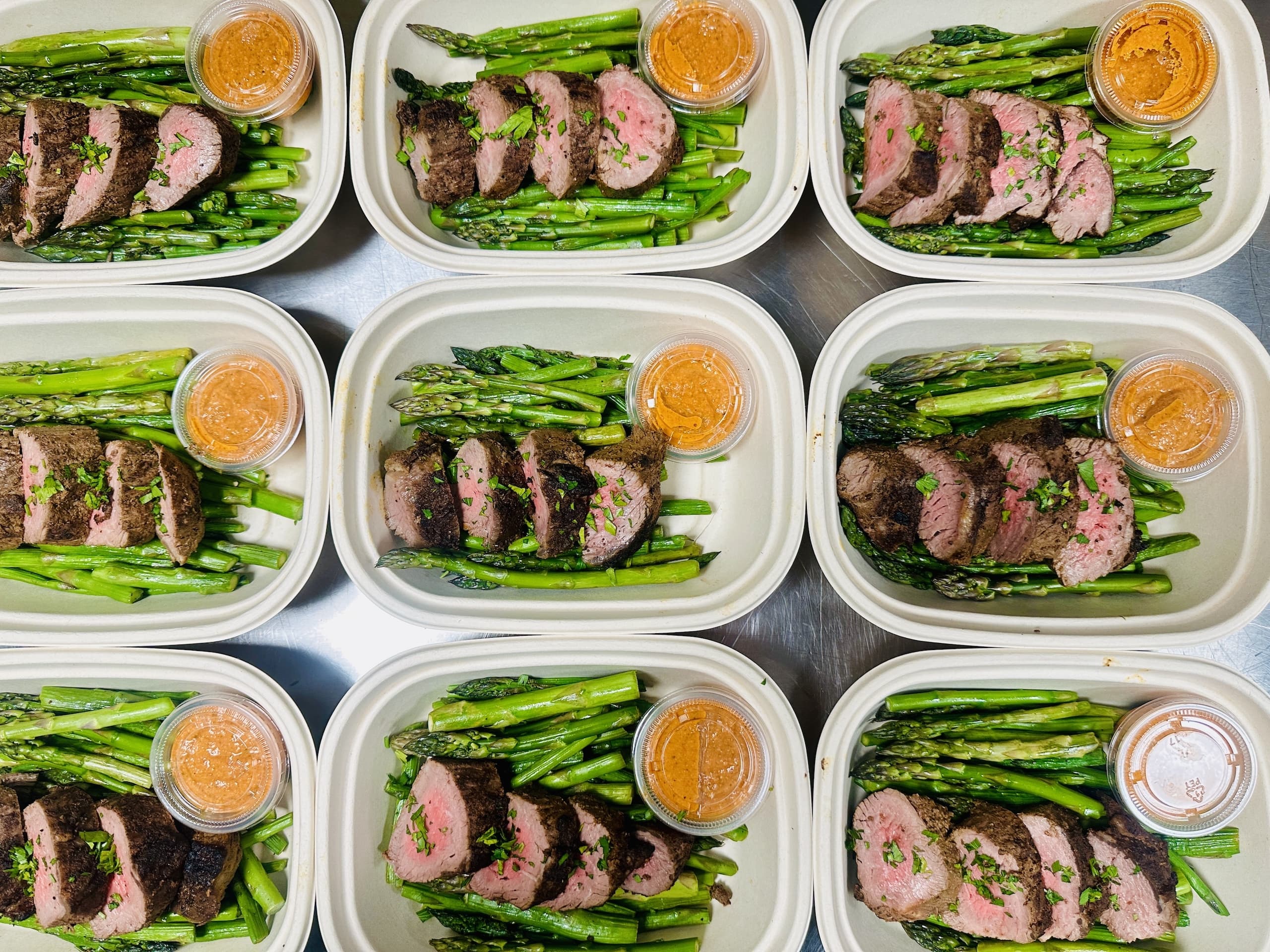

A workplace lunch program is no longer a “nice-to-have.” It’s a competitive differentiator that supports productivity, culture, health, and recruitment, all with measurable ROI.
Backed by data and employee demand, it’s an investment more and more workplaces are making.
This guide is written for Workplace Teams who intend to build a high-impact lunch program with ease and confidence.
Hybrid Work Has Redefined Office Incentives
Before 2020, showing up to the office was the default, and most companies didn’t have to “incentivize” it. Desks, meetings, coffee machines, and occasional happy hours were enough.
Today, in a world where remote flexibility is a baseline expectation, simply having an office is no longer sufficient to ensure attendance or engagement.
In the hybrid era, the office must compete with the convenience of home.
What employees value has shifted, and surveys show workers now prioritize:
- Flexibility over face time
- Meaningful in-person experiences over mandates
- Convenience over logistics
- Health, wellness, and social connection over rigid structures
89% of hybrid employees say they want to control when and why they come into the office. (Gensler U.S. Workplace Survey 2023)
Why Come In? The New Incentive Equation
Employees will happily come to the office when the value exchange is clear. The “why” of office attendance has to be defined and clearly communicated.
Employees no longer show up simply because it’s expected. Instead, they come in when the value of being on-site clearly outweighs the convenience of staying home.
This shift has created a new kind of cost-benefit calculation employees make every day, and smart companies are adjusting their workplace offerings to meet it.
A request to work from the office must hit the key value needs of employees. This means:
- Meaningful face time with leadership
- Intentional team collaboration
- Access to tools or resources not available at home
- Social and cultural experiences, including shared meals
Smart leaders understand time and convenience are currency, and they are creating experiences that outweigh the cost of a trip to the office.
Employees need to feel that the ROI of an office day is worth it.
Why Food at Work Matters
The business case for workplace lunch programs is well researched, and the data strongly suggests widespread impact on high-level company goals.
Sharing meals is one of the best things we can do for our wellbeing, reports the 2025 World Happiness Report. In a hybrid or dispersed team, mealtimes create natural touchpoints for bonding and cross-functional collaboration.
Employee Engagement
When companies provide healthful and inclusive food programs, employee engagement increases.
Deloitte Insights lists free food at work as a key engagement driver. Shared meals increase morale by up to 25%, according to Gallup.
Recruiting + Retention
Companies offering food perks see a 40% higher employee retention rate over five years. (Glassdoor Economic Research)
Productivity + Focus
Companies offering regular meals report 25% fewer distractions during the workday. (SHRM, 2022)
88% of employees say having food at work helps them stay focused and productive. (ezCater, 2023)
Connection + Collaboration
Shared meals improve workplace morale by 20–25%, according to Gallup’s Workplace Wellbeing Index.
Employees who eat together are 2x more likely to collaborate outside their department. (Harvard Business Review, 2020)
The Business Case for a Fully Managed Lunch Program
The systemic benefits of shared workplace meals come when meals are frequent, recurring, and predictable.
It is key for leaders to design a program that is professionally managed end to end and doesn’t become an administrative burden on the workplace team.
Using a single vendor specializing in office catering reduces time spent on food coordination for office managers by 75%. (Capterra, 2023)
In the following sections, we’ll explore how to build a successful recurring catering program that balances logistics, variety, nutrition, and cost.
With consistent vendor coordination, employee feedback, and proactive planning, daily catering can become a high-value perk that strengthens team culture and employee loyalty.
5 Steps to Design a High-Impact Lunch Program
1. Clarify the objectives of your lunch program
Define what you want the program to accomplish. Objectives might include improving retention and satisfaction, encouraging employees to return to the office, saving employees time, or building company culture.
2. Define the scope of the program
Consider:
- Meal type: breakfast, lunch, dinner, snacks, happy hour, or all of the above
- Days and frequency
- Meal format: buffet-style or individually packed
- Estimated headcount per day
- Common dietary preferences, such as vegetarian, halal, or keto
- Meal setup: one or multiple locations within the office
- Offerings: hot dishes, salad bar, panini station, soup, grab-and-go, desserts, etc.
3. Research pricing + determine your budget
The key cost drivers are headcount, meal format, and frequency.
4. Evaluate catering models + shop vendors
There are three office catering models to investigate. If you intend to create a regular meal program, you need a vendor that can manage the experience end to end.
5. Determine key metrics + calculate ROI
Identify KPIs to measure your program’s success. Use company-specific data to calculate ROI.
3 Office Catering Models Explained
On-Site Cafeteria
A company would invest in an on-site kitchen and cafeteria when it reaches a certain size and its daily volume justifies the investment in staff, space, and equipment.
This approach is most common among large enterprises with big campuses, like tech giants Google, Apple, and Meta.
Food Broker / Marketplace Aggregator
These companies act as an intermediary between your office and a network of local restaurants, caterers, and food providers.
They are tech companies that use their software and logistics to coordinate meals from multiple third-party sources. With this model, you don’t work with one chef or kitchen but instead get meals from a rotating selection of vendors and restaurants.
Carry-In Caterer / Direct Operator
Carry-in caterers prepare meals in-house through their own kitchens, chefs, and staff.
They operate like a full-service corporate catering company, not a marketplace, and maintain complete end-to-end control over sourcing, preparation, delivery, and service.
Evaluating Catering Vendors
The majority of workplace leaders are considering two of the three models: a broker or a carry-in caterer.
The primary difference between a food broker and a carry-in caterer lies in how the food is sourced, managed, and delivered, as well as the level of control and customization provided by each model.
Once you select the right model for your company, research vendors, read their content, and look for testimonials.
What to Look For
- Specialization in corporate daily meal delivery
- High-quality, fresh, nutrient-rich food with diverse menus for different tastes
- Expert account management supported by KPI reporting
- Dietary inclusivity, including clear ingredient and allergen labeling and high-quality alternatives
- Management of logistics, delivery, setup, and cleanup
- Automatic portion adjustments based on headcount, menu type, and your team’s consumption patterns and preferences
- Environmental accountability, including leftover food donation, waste tracking, and carbon emissions tracking
- Scalability across locations so the program can extend to additional offices or hybrid teams
What Office Catering Costs
The key drivers of pricing are headcount, meal format, and frequency. Prices typically range from $15–$25+.
Pricing can be structured in several ways, so when collecting bids, be sure to ask vendors how they structure pricing and exactly what is included.
Many vendors provide an all-inclusive per-person, per-meal price that includes food, delivery, on-site management, data tracking and reporting, and complete account management.
Other vendors charge delivery and tax on top of the quoted price.
The Buying Process
1. Research
Conduct significant background research. Find three vendors that match your goals and reach out.
2. Strategic Buying
Share your requirements with vendors and collect proposals and contract details. Create feature and cost comparisons.
3. Talk to References + Share With Stakeholders
Bring finance, operations, and workplace stakeholders in early. Determine what they need for their decision-making process.
4. Negotiate + Contract
Lunch programs can be highly complex, with many factors beyond service and price.
Review contracts thoroughly and ask vendors for what you need.
Metrics to Measure Program Success
Once you implement a program, pay close attention to key metrics. These will help you determine whether the program is meeting the objectives it was designed to achieve:
- Participation rate: lunch attendance divided by total office population per day
- Employee satisfaction
- Cost per employee per day
- Time saved by reducing administrative time and off-site meal breaks
- Waste volume, including leftovers or unused meals
- Environmental impact, including leftover donations and CO₂ emissions
Related resources
Office Catering Models: Side-by-side Comparison Chart

Lunch Money: Understanding the Funding Structures

Corporate Catering Pricing by City
Let's talk about
your workplace
food program.