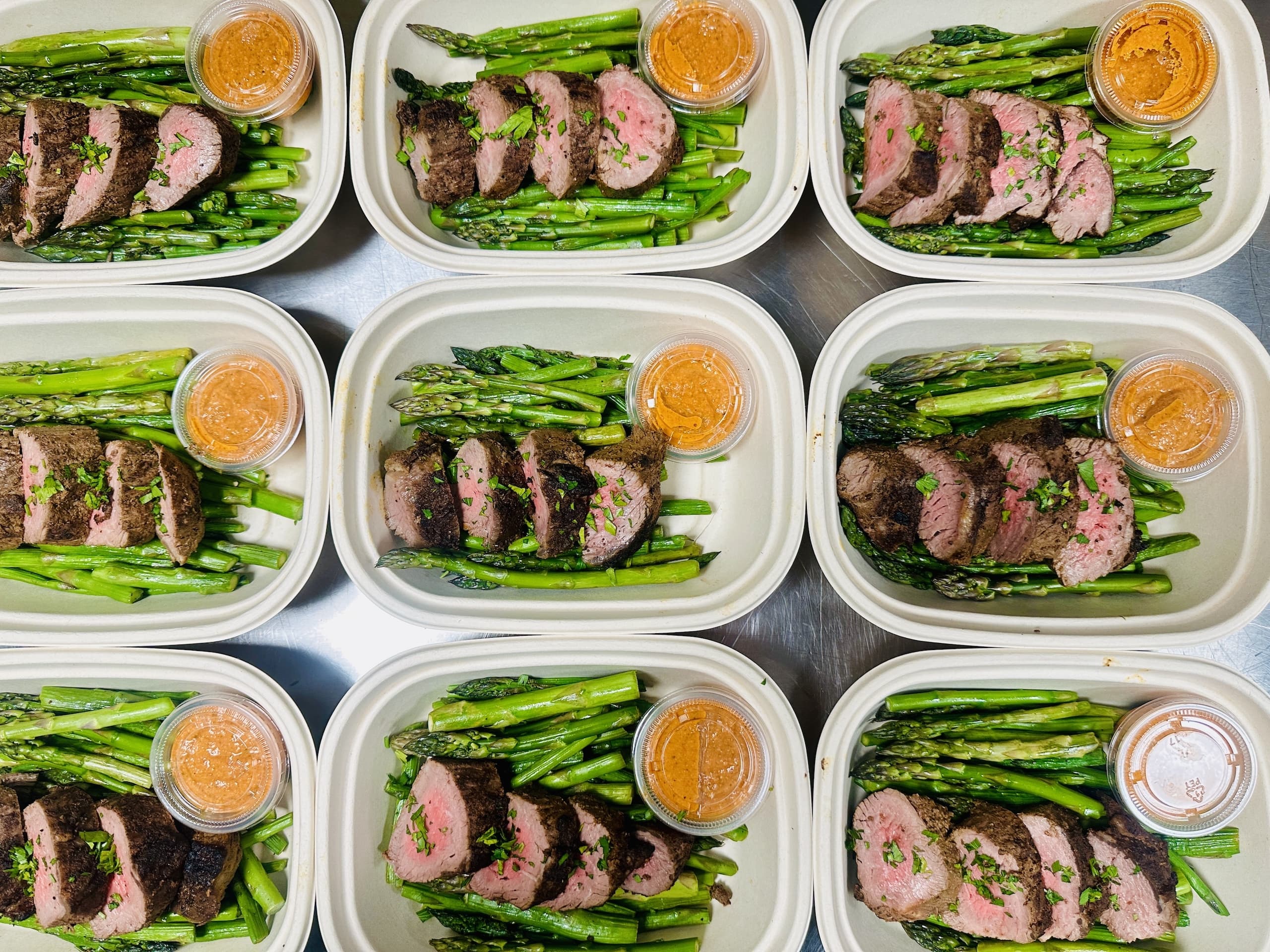

Most workplace lunch programs are funded in one of two ways. The difference isn’t simply how employees get lunch. The funding structure shapes how people eat, how they interact, what companies can measure, and ultimately what the food program accomplishes.
This guide looks at two common models: distributed spend through stipends, subsidies and individual ordering, and centralized, company-funded catering programs.
Two Ways Companies Fund Lunch
Distributed Spend System
The money is pushed outward to employees through stipends, subsidies, debit-card allowances and app-based individual ordering.
Meals are purchased and consumed individually, often at desks, with minimal visibility into patterns or outcomes.
Centralized Spend Program
Spend is pooled into a unified, company-funded catering experience. Meals are shared onsite and data is collected centrally.
This structure is used most often to strengthen culture and align food spend with organizational goals.
Why Food Strategy Matters
Food is one of the few workplace benefits that touches nearly everyone.
Surveys repeatedly show that free or subsidized food is one of the most valued benefits among tech workers, with 57% of employees ranking it among the most meaningful workplace offerings.
A recent survey summarized in Inc. reported that 88% of business leaders believe a corporate meal program can increase in-office attendance, and three in four say catering is linked to better retention.
The question is not whether you spend on food. It’s whether that spend is working as hard as it could.
Distributed Spend: Stipends and Meal Allowances
A Distributed Spend System allocates funds directly to employees, typically through stipends, meal allowances or app-based individual ordering.
These systems grew rapidly during the rise of hybrid and remote work because they offered flexibility, required little operational infrastructure and allowed employees to select meals that met individual dietary needs and schedules.
Research on these programs shows several consistent patterns across workplaces. When lunch is sourced individually, employees tend to eat at their desks or on their own schedules.
When stipends work best
Workplace studies indicate that decentralization results in fewer shared meals and fewer opportunities for informal interaction throughout the day.
Stipends work best in organizations where employees are not co-located. When there is no shared workplace, there is no opportunity for communal dining or a centralized culinary program. They can also be effective in environments where convenience is the top priority.
Providing individual allowances ensures remote employees still receive a meaningful food benefit without requiring physical infrastructure.
The Centralized Spend System
A Centralized Spend Program pools meal spend into a single, company-funded catering program.
Meals are prepared by a single team, served onsite, buffet-style or in a similar format, and consumed in shared dining spaces.
This structure tends to be most effective in environments where employees spend meaningful time onsite, collaborate across teams, or when leadership aims to build culture, community and operational visibility through food.
What Happens When Teams Eat Together
A growing body of research underscores the social and organizational benefits of communal meals.
A field study of teams who ate together found that they performed significantly better as a group than teams who dined separately.
Studies of commensality, the act of eating together, link shared meals with stronger interpersonal trust, greater life satisfaction, an enhanced sense of community and deeper social bonds.
In a workplace context, these benefits translate into more informal interaction, easier communication across silos and a stronger sense of belonging.
When Centralized Spend Works Best
A centralized program is particularly well suited to workplaces where:
- In-office workdays are encouraged
- Work requires cross-team interaction
- Goals hinge on employee engagement, strong culture and overall well-being
- Operational efficiency and sustainability are priorities
Why Centralized Funding Supports High-Growth Teams
Social eating increases trust, engagement and life satisfaction.
Teams that eat together regularly show significantly higher cooperative behavior and group performance.
Shared meals also provide a consistent opportunity for informal communication, interdepartmental mixing and spontaneous ideation.
Choosing the Right Funding Structure
Both funding structures have legitimate use cases.
Distributed spend remains well suited to fully remote teams or workplaces where convenience is the top priority. It provides autonomy and simplicity in settings where communal dining is not central to the workday.
For organizations focused on improving in-office engagement and strengthening culture, a Centralized Spend Program offers advantages that distributed systems cannot replicate.
By pooling spend, companies create opportunities for employees to gather, gain visibility into participation and preferences, and reduce environmental impact through bulk preparation.
How Sifted Approaches Centralized Workplace Food
Sifted’s catering framework is purpose-built for companies that want food to play a meaningful role in workplace culture.
With globally inspired menus, chef-led culinary development and dining formats that encourage employees to linger rather than isolate, Sifted transforms lunch into a predictable moment of connection.
Sifted layers a sophisticated analytics engine onto that shared experience, providing insight into attendance patterns, automatic portion and headcount adjustments, and opportunities to minimize waste.
Because spend is centralized, every dollar can work harder.
More insight. More efficiency. More connection. More cultural return.
Sources & Research
- ezCater, Food for Work 2023 — Survey of 1,000+ employees receiving free or subsidized food found 57% appreciated free/subsidized food more than other workplace perks.
- ezCater, Food for Work 2024 — Found 88% of business leaders agree food encourages employees to work onsite, while 78% believe workplace food makes employees more likely to stay with the company. This is actually stronger and more precise than the paper’s “3 in 4” retention language.
- Cornell University, “Eating Together at the Firehouse” — Researchers studying firefighter platoons found that teams that ate together more frequently demonstrated higher group job performance. This supports the shared-meals/team-performance section.
Related resources
Office Catering Models: Side-by-side Comparison Chart

Feeding Culture: Complete Guide to Office Catering

Corporate Catering Pricing by City
Let's talk about
your workplace
food program.